How Tufts is leveraging AI for dental research and education
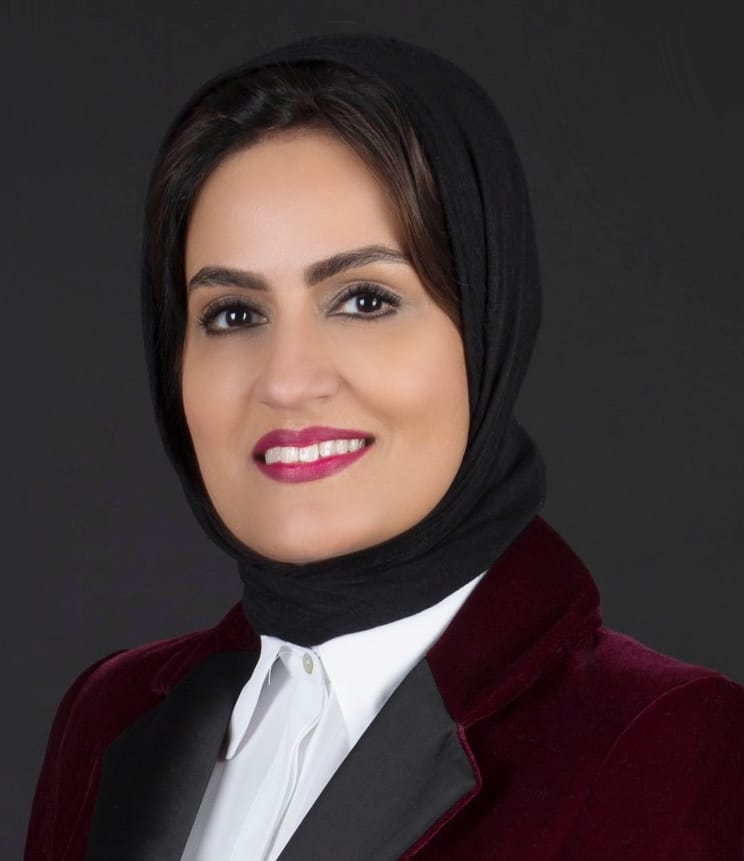
Tufts University School of Dental Medicine is leaning into AI. Hend Alqaderi, BDS, DMSc, directs the Dental AI Lab at Tufts University and teaches dental students a course on AI in dentistry. Dr. Alqaderi spoke with Dental Bite about the AI research underway at Tufts, what students are learning and how the technology could continue to shape the future of dentistry.
—Interview by Carrie Pallardy, edited by Bianca Prieto
Can you tell me about the Dental AI Lab at Tufts? What kind of work is being done there?
Before I got involved in artificial intelligence, my research was about analyzing data from saliva, including bacteria, biomarkers, inflammatory biomarkers, metabolites, byproducts of bacteria and immune cells in the oral cavity.
Traditionally, the way that we analyze these data: we send saliva samples to the lab, receive hundreds or maybe thousands of data on all of these biomarkers. Before I learned about AI and machine learning, I used traditional statistical analysis to analyze these hundreds or thousands of data. When machine learning emerged in the past few years, I started learning about it. I attended courses at MIT about how to analyze or process huge data sets, including biomarkers in saliva. I thought that we could apply all of these AI tools in dentistry.
We started some pilot projects, and we got some funding from a dental AI company called Beyond AI, based in Los Angeles. They're affiliated with Caltech. We visited them; we proposed our ideas to them and they funded our AI lab. We started the Dental AI lab in June 2025.
Dentists will take multiple X-rays, and most of the time, they will focus on the chief complaint of the patient and overlook some other conditions. The idea is that AI can capture everything if we train the model well. What we did so far: we used data that we have at Tufts, and we built an AI model that can look at the X-ray, detect the problems: cavities, periodontal disease, bone loss, lesions. AI can give you a report, including diagnosis and treatment planning.
In addition to X-ray analysis, we also do the same concept with image analysis, using the 3D scan data. We collect data from the records, and we label them. We train and develop an AI model that can look at the 3D scan data and provide a report. We're trying to develop a comprehensive tool that can look at both oral images and dental X-rays to provide diagnosis and treatment planning.
We are also developing a language model that can restructure the clinical note data. We, as dentists, usually write clinical notes in an unstructured way. It's very challenging to use this in analysis or research. We developed an AI tool that can go over the notes and restructure them so we can use them in prediction, analysis and machine learning.
All of these ideas are in the research phase, but in the future, we're planning to work with our sponsor to develop software or an application that can be integrated into the electronic system and can facilitate and enhance the work that we do.
How are you educating dental students about AI applications in dentistry? Can you share some insight into the class you teach?
We teach them the ethics and the regulatory considerations associated with using AI. We introduce the concepts of machine learning, deep learning, language models and their applications in dentistry. We show them examples of how to use them in dentistry.
We also invite some speakers from the dental AI companies with applications that are already in the market. They come and share their experiences on how they developed these tools, and how these applications can work in reality. We worked with some of these AI companies to evaluate them. So we were able to get access from one AI company, and we have workshops and some practical sessions with a student so they can go over the dental AI application and evaluate them on the quality of work, how user-friendly these applications are and how accurate.
We developed a checklist because now every day there are new applications in the market, and we want to make sure that these applications that students will buy in the future are valid and reliable.
We also help students who are interested in developing their own tools in the lab. We collaborate with data scientists and computer scientists at the School of Engineering. We assign students from the dental school to computer scientists, PhD students, who are working on medical AI projects.
AI is moving so quickly. What are some future dental applications you are excited about?
So far, there are several AI companies detecting pathologies or problems from X-rays. This has been very accurate so far. We are developing our own AI tool at Tufts now.
I think in the future we can see robotic AI and implants. AI agents can detect the location, the measurement of the dental implant, and can guide the dentist on the location and measurement of dental implants. AI can also help with communication between the dentist and the lab in constructing the dental implant.
People are starting to think about robotic dental AI as well, not to perform dental procedures, but to guide the dentist. People can think about crown process preparation. Also, AI can provide some guidance, having a sensor in the handpiece. We are hearing that maybe in the future, AI can help in guiding that. It's not going to be a robot performing the procedure, but some kind of sensor that can increase the accuracy of the preparation for fillings or prosthodontics.
This conversation has been edited for brevity and clarity.
Thanks for reading today's edition! You can reach the newsletter team at newsletter@dentalbite.co. We enjoy hearing from you.
Interested in advertising? Email us at newslettersales@mvfglobal.com
Dental Bite is curated and written by Carrie Pallardy and edited by Bianca Prieto