Lab-grown grafts could change the future of oral care

Oral tissue grafting is a vital treatment option for issues like cancer in the mouth and receding gums, but sometimes grafts fail. Researchers at Virginia Commonwealth University, in partnership with the University of California, San Francisco and Cedars-Sinai Guerin Children’s,
are in the lab working toward a future in which you could grow living grafts specific to individual patient needs.
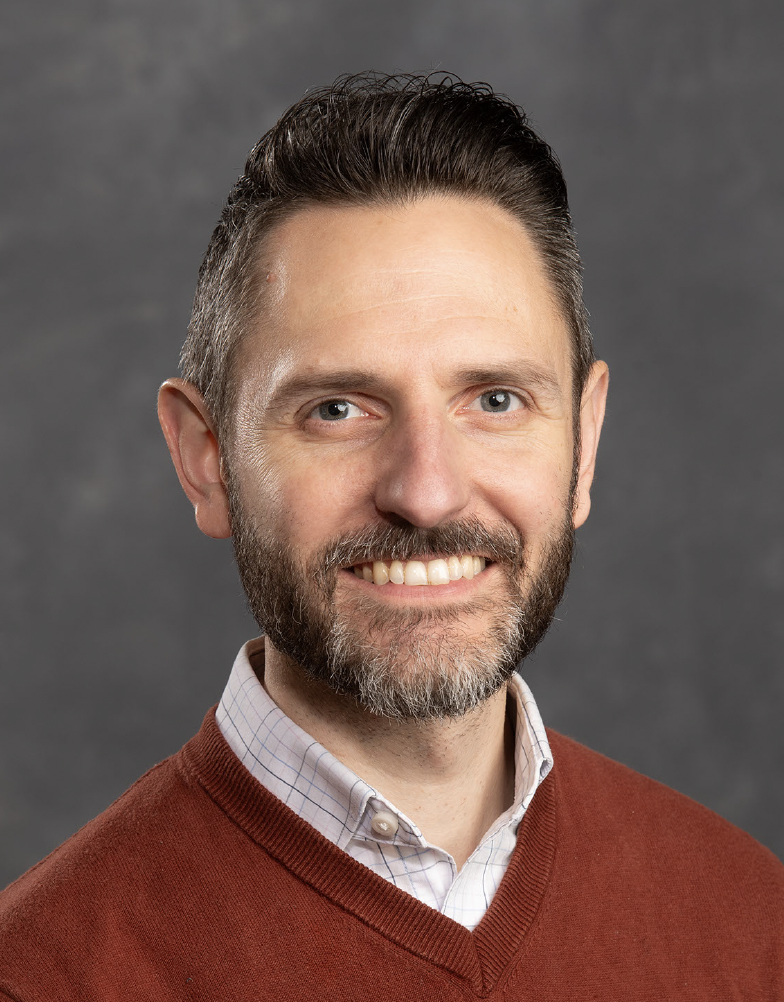
Kevin Matthew Byrd, DDS, PhD, one of the lead researchers and an assistant professor at the VCU School of Dentistry’s Philips Institute for Oral Health Research, talked to Dental Bite about the research, the $5.7 million National Institutes of Health grant supporting it and how he hopes it could change patient care.
—Interview by Carrie Pallardy, edited by Bianca Prieto
What inspired your research? What are some of the current limitations of oral tissue grafts?
I did my dental training at the University of Michigan. I graduated in 2013. When I went down to the University of North Carolina, I came to do both a perio-focused residency, but also I went over to the School of Medicine to pursue a PhD on wound healing and epithelial stem cells. I trained in a lab with someone who was quite famous in skin biology. We applied that to the oral tissues.
I went back to the clinic after having about a five-year venture solely focused on research from 2013 to 2018. In 2018, I started seeing patients again, and I was seeing the issues with wound healing chairside and with my patients. One of the things that became very clear to me is that [there are] epithelial cells, but there are cells underneath that support them. We don't know a lot about those cells in the oral cavity. Some of our research started pointing [out] that those cells are really important in that process.
We started thinking about ways we could possibly harness their powers to better encourage the grafting process. A lot of research over the last couple of years has helped us to better understand that heterogeneity and possibly some of the mechanisms of its control.
How will the NIH grant support your research? Can you talk about the initial stages of the study, and where you are today?
Since 2020, our team has been building out a large international consortium to map the individual cells of the entire oral and craniofacial complex. In that process, you start to find out things you didn't originally expect. We had started putting together data with these teams and finding some of those cells that are the support cells, particularly of the hard palate, where we get our grafts, and some support cells around the gingiva, where we place our grafts. They were different, and it was meaningful.
We just had a paper that was accepted that should hopefully be out in the next couple of weeks at Cell Press that shows really the first integrated data of these last five years of all these cells, in particular, the cells we're interested in harnessing their power. These cells are called fibroblasts.
We've already moved forward on their characterization. We have new ways to culture those cells individually. We think that there's one population or one really important cell type that's a fibroblast that's in the hard palate and another one that's in the gingiva. We have isolated those cells for co-culture with the different types of lining cells. I'd say even just this month, we've made some serious gains.
Where do you hope this research will lead?
This is a three-part grant. The first is to describe, understand and harness. The second aim is to figure out a way that we could engineer essentially a factory of these cells without requiring patients to have that second graft, that second site of surgery.
The final part of the grant is this wonderful collaboration with 4D bioprinting at the University of California, San Francisco. That's going to take this three-part graft with these cell types and these molecules we think are going to essentially improve grafting and put this into a mouse. This would be the preclinical phase.
If that is successful, the very next phase would be us thinking about how we both discover, produce at scale and then show success in a preclinical model and move towards at least a clinical trial. I'm hoping to see how we could leverage this in humans.
Thanks for reading today's edition! You can reach the newsletter team at newsletter@dentalbite.co. We enjoy hearing from you.
Interested in advertising? Email us at newslettersales@mvfglobal.com
Dental Bite is curated and written by Carrie Pallardy and edited by Bianca Prieto